

HFB | Power Station
Part of a vast abandoned steelworks in Belgium, the HFB Power Station supplied energy to the entire site. Steel production stopped around 2011, though this plant reportedly remained operational for some time after. The steel industry here dates back to 1817, when John Cockerill founded the first metallurgical company on this ground. Blast Furnace No.6, built in 1959, operated until 2008. This power station supported everything that required heat, air, steam, and electricity.

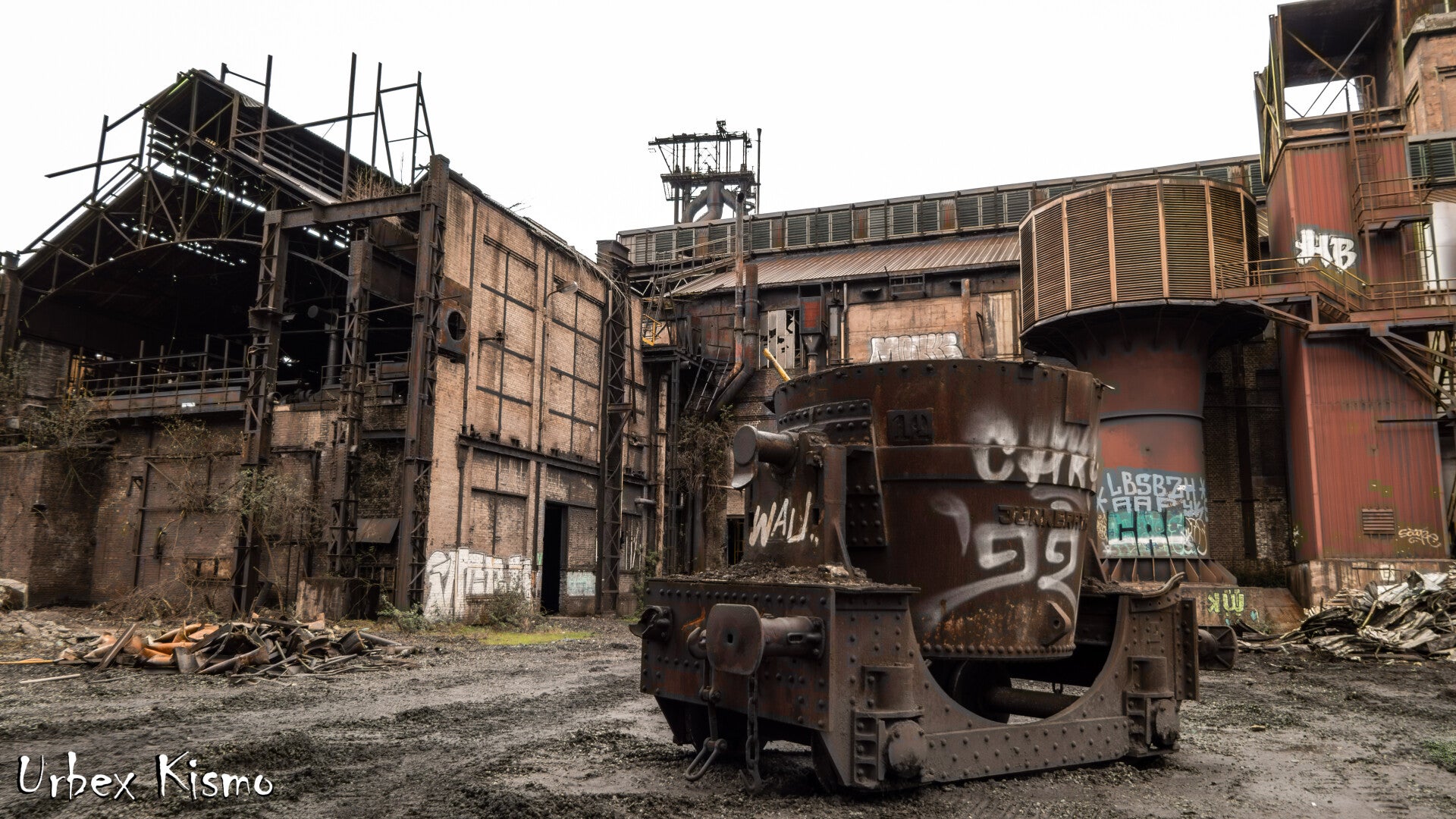


Energy backbone on the Steelworks.
SE6 Turboblower
The SE6 was an electric turboblower installed to supply large volumes of compressed air. Powered by a 26 MW motor, it drove a massive compressor system. Due to the extreme noise levels, it was placed inside a dedicated insulated hall. When HFB was fully operational, this machine alone consumed up to 16 MW of electricity. One of the turbine blades are lost next to it.
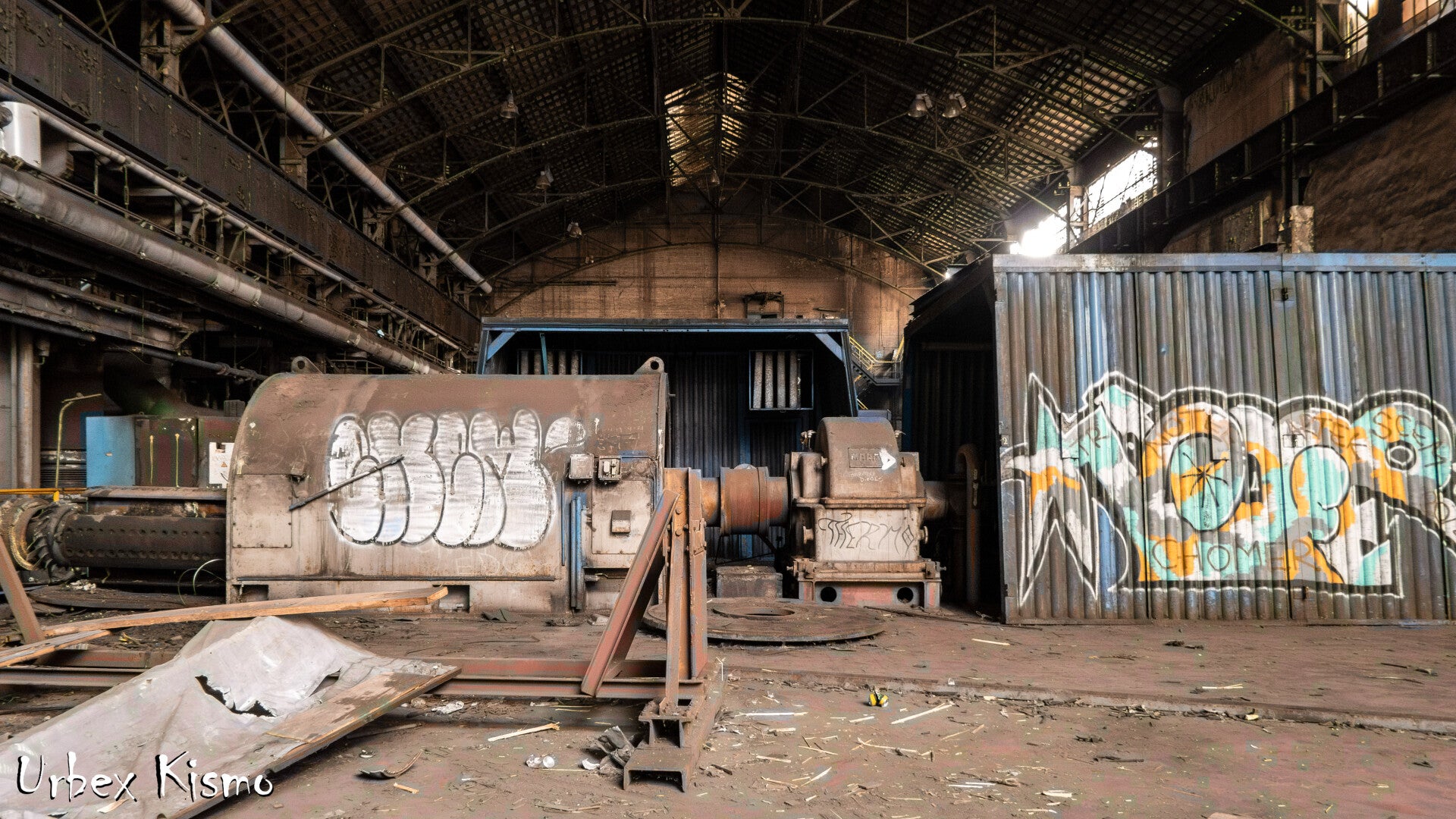
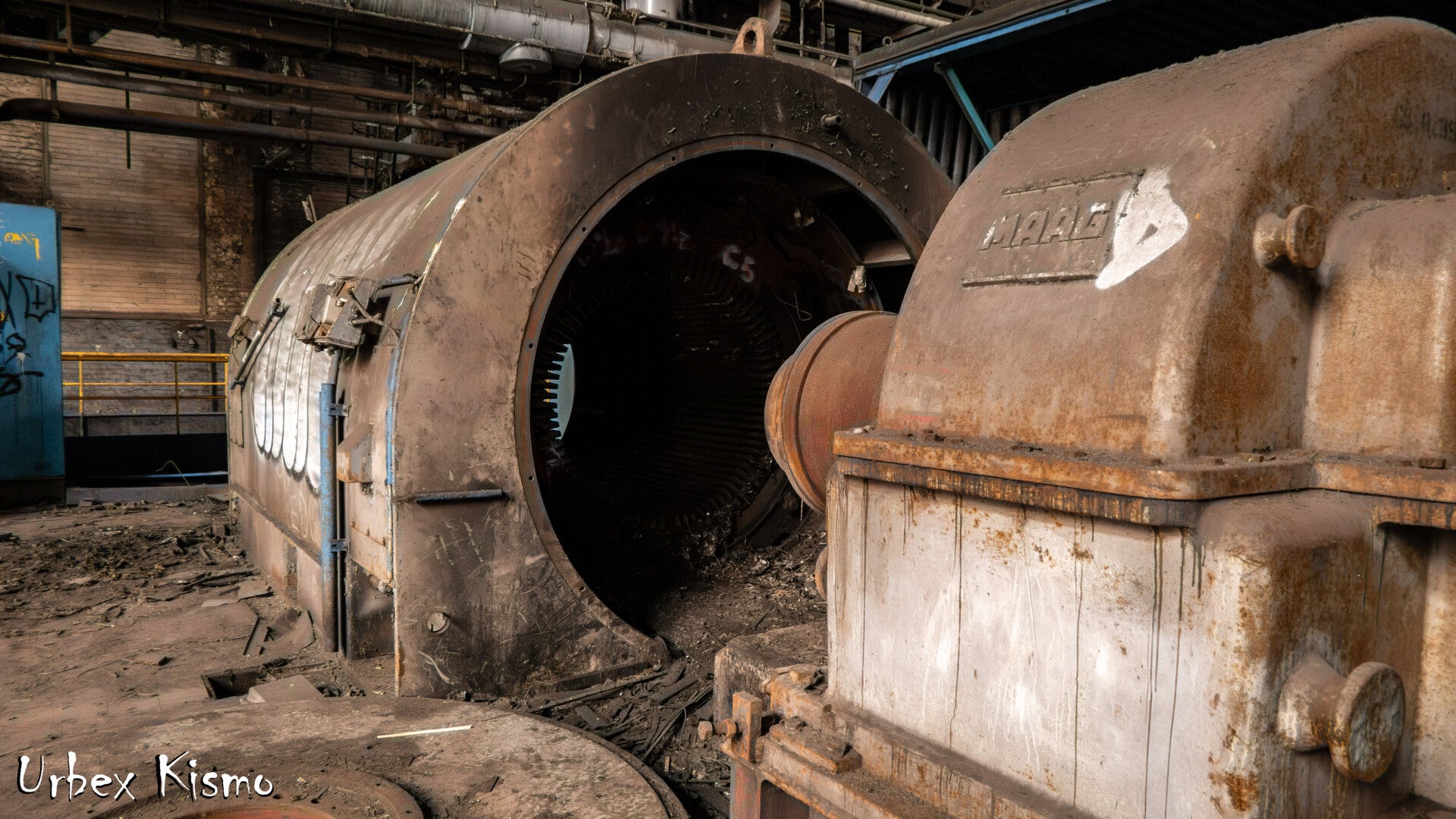


26 MW electric-driven compressor
TS5 Turboblower
The TS5 was a steam-powered turboblower that supported the blast furnace by delivering pressurised air. This hot air intensified the combustion of coke inside the furnace core. Its capacity was limited, which made it less appreciated by furnace operators, but it remained a key part of the air supply system.


Steam-driven blast support.
TA6 Turbine
The TA6 turbogenerator converted surplus 14 bar steam into electricity. It reduced steam pressure down to vacuum level, allowing energy recovery instead of waste. The turbine processed around 85 tons of steam per hour and delivered up to 14 MW of power, connected to an ACEC generator rated at 22.5 MVA, 6.3 kV, running at 3000 rpm.


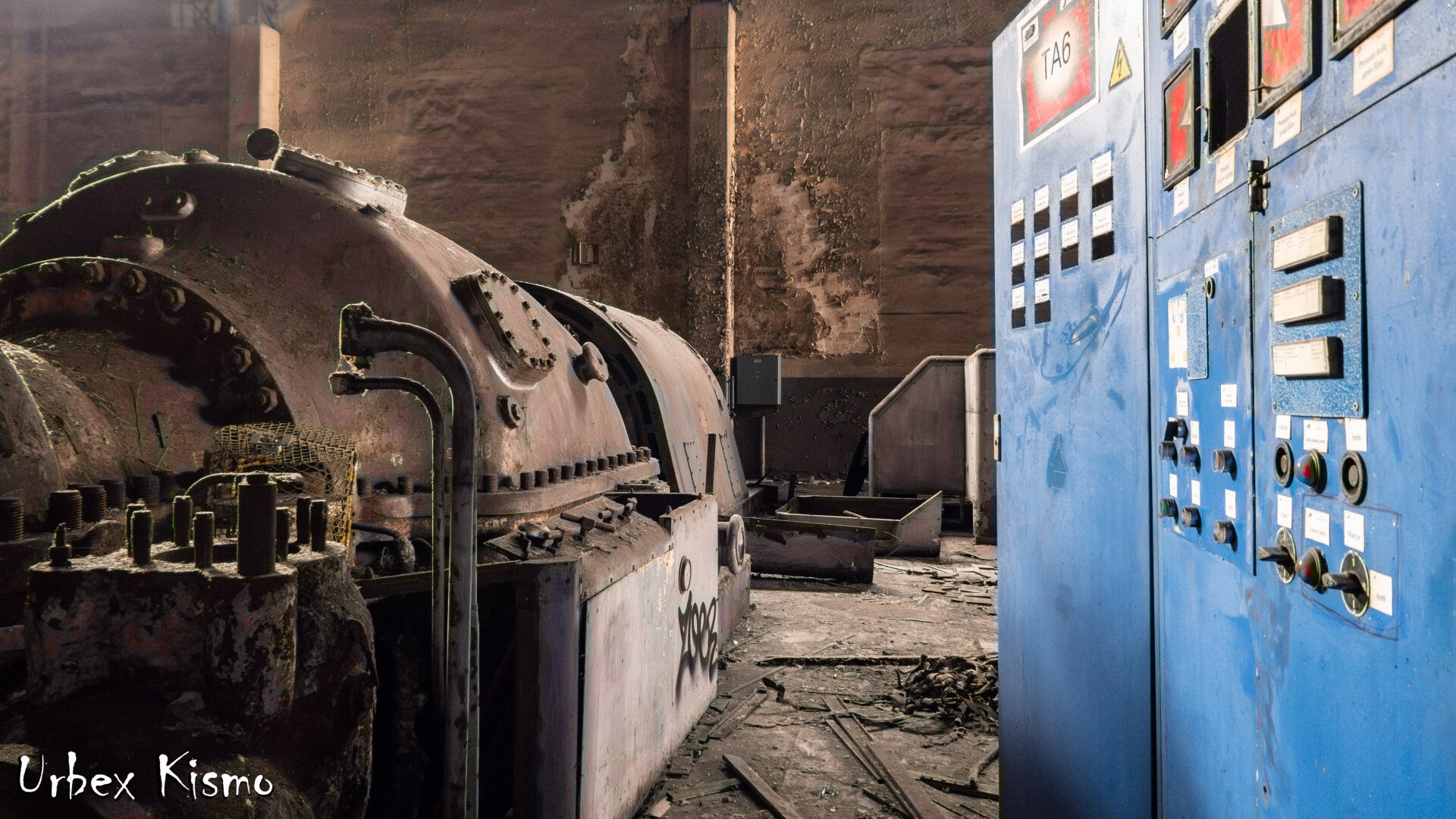


Converting excess steam into electricity.
TA7 Turbine
The TA7 was a high-pressure expansion turbine operating at 13 bar and nominally at 14 bar. It generated up to 7 MW. The blue section represented the compressor, while the turbine handled the steam expansion process. This unit contributed to stabilising steam pressure across the installation.


High-pressure expansion turbine.
Main Hall
The main hall housed the turbine-alternator assemblies and the major blower systems. From this vantage point, the scale of the operation becomes clear. Massive pipelines, the 14 bar steam line (BP), and multiple generators worked together to balance energy production and recovery across the steelworks.


The mechanical core of the plant.
Control Room
The control room monitored both low and high-voltage networks across Ougrée, including 6.3 kV and 70 kV systems. Before PLC automation was introduced, operators manually supervised load balancing and distribution. Only authorised personnel had access to the electrical control rooms for safety reasons.

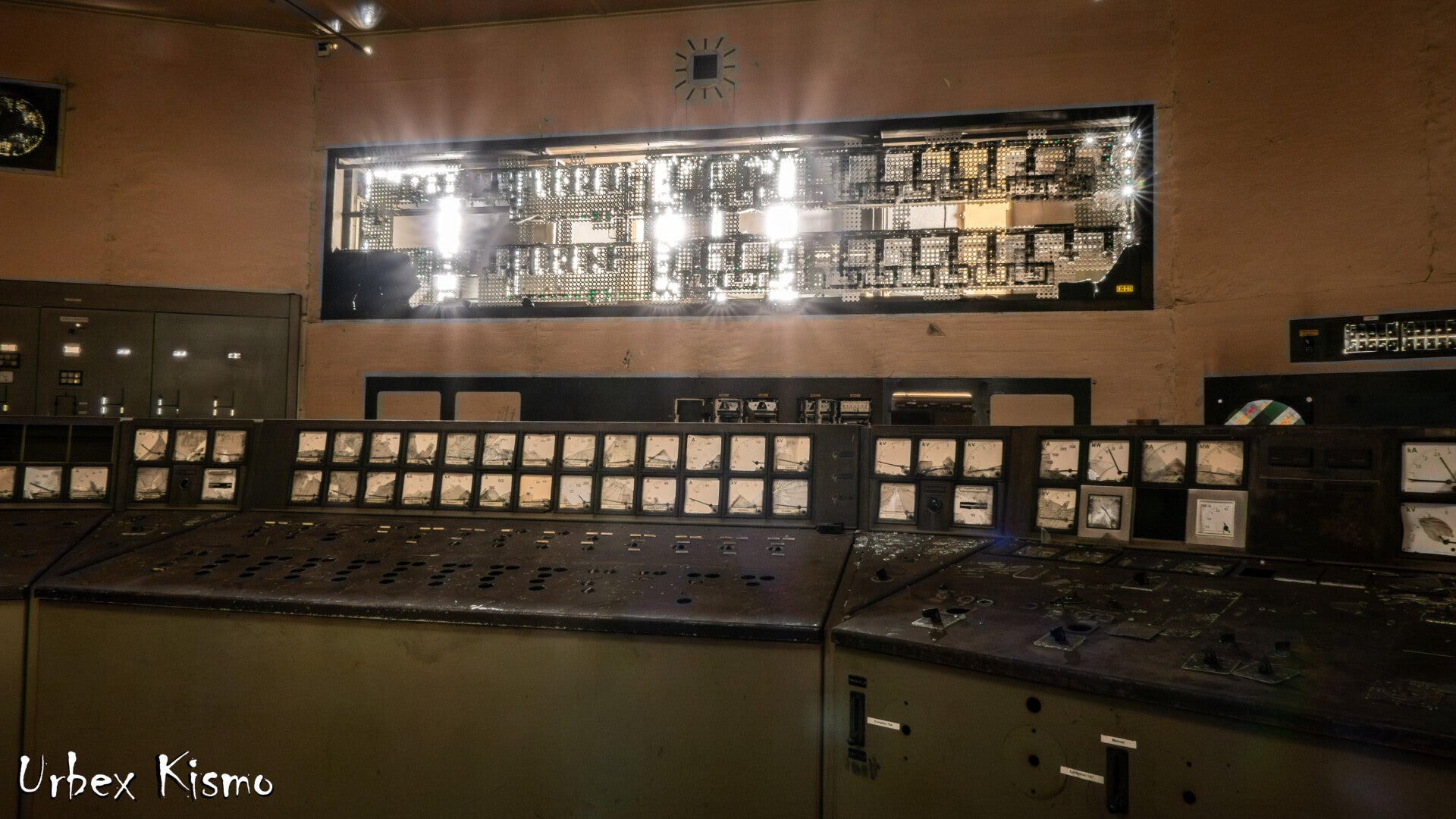


Managing electricity and distribution.
Overhead Crane
The overhead crane allowed technicians to install and maintain turbines, generators, and compressors weighing dozens of tons. Without it, replacing turbine blades or servicing alternators would have been impossible. It was essential for large-scale mechanical maintenance.


Heavy lifting inside the hall.
Below the Machine Hall
Below the main hall, compressed air systems supplied 8 barg air across the Ougrée site. Large Centac compressors and distribution manifolds ensured stable air delivery. This lower level reveals how the plant supported not only power generation but also industrial air systems.


Compressed air and auxiliary systems.
Roof and Demolition
From the roof, the scale of the steelworks becomes evident. Cooling systems, gas pipelines, and structural reinforcements connected the power station to the blast furnace complex. Parts of the building have since been dismantled, marking the gradual dismantling of a site that once generated both energy and recovered surplus power for reuse.


End of an industrial era.


Create Your Own Website With JouwWeb